
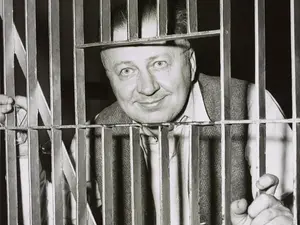
Inside the Mind of NYC's 'Mad Bomber'
By Jennifer A.. Jul 25, 2024
From 1940-1957, one man terrorized the city of New York with his campaign of fear. His name was George Metesky - but you may know him as the “Mad Bomber.” Let’s revisit the details of this complex case that stumped police for 16 long years.
Who was the Mad Bomber and how did he reign terror upon New York City?
Here is a brief timeline of the events of the Mad Bomber case:
Nov. 16, 1940: A bomb is found on the ledge of a window in the Consolidated Edison building in New York City. A message is attached that reads: “Con Edison crooks, this is for you!” The bomb never explodes, and no one knows who planted it.
Sept. 1941: Another bomb, which never explodes, is found near the same building.
Dec. 1941: Police receive a letter signed “F.P.,” in which an anonymous person takes responsibility for the two previous bombs and vows to cease planting bombs during the Untied State’s impending involvement in World War II.
1950-1957: The bombing campaign resumes, with at least 33 bombs planted in crowded areas throughout New York City, including Grand Central Station, the New York Public Library, Penn Station, Radio City Music Hall, and Macy’s. Twenty-two of the bombs actually exploded, injuring 15 bystanders.
No one knew that the Mad Bomber’s name was in fact not F.P., but George Metesky.
What was the public reaction in New York City?
Heightened fear, anxiety, and vigilance quickly spread among New Yorkers during the bombing campaign. The Mad Bomber seemed to choose random locations and public spaces for his attacks, and this gave the public a sense of insecurity as they went about their daily lives - not unlike contemporary terrorism threats.
How did Metesky’s appearance help him blend in with the public?
While New Yorkers feared bombings in public places, the Mad Bomber was actually hiding in plain sight. On the outside, he looked like anyone’s next-door neighbor - a middle-aged man in his 50s who dressed conservatively and wore gold-rimmed glasses, like many men of that time.
He lived with his unmarried sisters in an unremarkable, middle-class house and had previously held a steady job as a plant worker at - you guessed it - Con Edison. He kept his appearance tidy and modest.
All these factors combined to help Metesky blend into the general public and carry out his activities without drawing anyone’s attention as the potential mastermind behind the bombings.
How did George Metesky evade capture for so long?
Several factors made it difficult for investigators to connect the dots over the span of 16 years and pinpoint Metesky as the culprit:
-
Metesky’s voluntary hiatus from public bombings during World War II created a nine-year evidence gap between the earlier and the later bombings. Furthermore, forensic techniques in the 1940s and 1950s were far less advanced than they are today.
-
Metesky planted bombs in seemingly random locations across New York City, making it difficult to predict his next target. However, he actually lived outside the city in Waterbury, Connecticut.
-
Metesky enjoyed sending letters to the media, signing them “F.P.” (which he later said stood for Fair Play), to throw the police off his trail and manipulate public perception to his advantage.
How did criminal profiling play a role in the ‘Mad Bomber’ case?
By 1956, investigators had become increasingly frustrated with solving the Mad Bomber case. They decided to try a relatively new method of investigation: criminal profiling. Police worked with psychiatrist James A. Brussel to create a profile of the bomber, to narrow down the suspects.
Brussel used the letters from the Mad Bomber and crime scene evidence to construct a detailed criminal profile. In a shockingly accurate portrayal, he predicted the bomber would have the following characteristics:
- A male, 40 to 50 years old
- Born outside the United States, with eastern European heritage (Metesky was the son of Lithuanian immigrants)
- A bachelor that lives with female relatives
- Prone to paranoia
- Athletic build
- No facial hair
- Neatly dressed and likely to wear a double-breasted suit
How was the Mad Bomber eventually captured?
Police provided Brussel’s criminal profile to Consolidated Edison and asked the company to search its personnel files for disgruntled employees who matched the profile. Metesky was injured in an industrial accident in 1931, was disabled for half a year, and then terminated. His worker’s compensation claim was denied because he waited too long to file, and his three appeals were also denied.
Around the same time, investigators collaborated with The New York Journal-American newspaper to publish an open letter to the Mad Bomber. By luring Metesky into responding to the letter, police were able to gather more clues and narrow down suspects further.
Finally on Jan. 21, 1957, police knocked on Metesky’s door and requested to interview him. To their surprise, Metesky precisely fit Brussels’ profile, even down to the double-breasted blue suit. He immediately confessed to the crimes and even claimed credit for planting 15 additional bombs at an earlier date.
Police arrested Metesky, and four months later, he was declared legally insane and a paranoid schizophrenic. Sentenced to the Matteawan Asylum for the Criminally Insane without trial, he died in 1994.
History remembers the Mad Bomber case not only for the terror it brought to New York City over 16 years, but also because it set the stage for how investigators would use criminal profiling to solve complex cases in the future.
References: George Metesky | Unmasking the Mad Bomber | A 16-Year Hunt For New York’s ‘Mad Bomber’ | Criminal profiling: the reality behind the myth

The Topline News team was assisted by generative AI technology in creating this content
Trending

Earn Massive Cash Back With This Card
Sponsored
Cold Case Investigator Says Marilyn Monroe's Death Scene Was 'Too Pristine'
Jordan Reyes

The Dumb Money Mistake Most People Make
Sponsored
Mom's Birthday Text Came Hours Before Daughter Killed Her
Jordan Reyes

These 14 Benefits Could Save Seniors Thousands
Sponsored
Mark Sanchez Stabbed 4 Times - Now Faces Prison
Alex Morgan
Jury Rejects Self-Defense, Sends Teen to Prison 35 Years for Track Meet Killing
Taylor Bennett
Husband Sentenced to Life in Au Pair Murder Case
Taylor Bennett

Nicole Brown Simpson Said 'I'd Rather Die' - Her Ex Finally Speaks
Dana Whitfield
James Harden Pulled Over at 3 A.M., Booked by Dawn
Taylor Bennett

Pastor Dies Hours Before Facing Wife's Murder Charge
Jordan Reyes
Alex Murdaugh's Murder Convictions Are Gone - He Is Still in Prison
Jordan Reyes

Actor From 'Top Gun: Maverick' Killed at Home - Arrest Made
Taylor Bennett
Actor From 'Elf' and 'Friday' Arrested After Missing Child Support Hearing
Jordan Reyes
IRS Agent Gets Life in Prison After Double Murder Plot With Family's Nanny
Alex Morgan
Psychotherapist, New Mom, Stabbed to Death at Home
Dana Whitfield
Teens Paid to Shoot and Film It. A Veteran Cop Was Killed Trying to Stop Them.
Jordan Reyes
Texas Psychics Charged After Telling Victims a Curse Required a Corvette
Alex Morgan
'Get Him Out of Here' - Judge Orders Gilgo Beach Killer Removed After Families Speak
Alex Morgan

Missing Royal Caribbean Crew Member Found Dead in St. Kitts
Dana Whitfield

Mail Carrier Killed Months After Losing Her Husband
Taylor Bennett
They Planned Drone Bombs Over the Crowd. A Teenager's Mother Called the FBI.
Dana Whitfield
Three Women Charged in Daylight Murder of Young Mom
Alex Morgan

Georgia Couple Arrested for Murder After Bartender Found Dismembered in Reservoir
Dana Whitfield