
Thieves Stole $5M in Food by Posing as Truckers
By Taylor Bennett. Jun 16, 2026
The Paperwork Looked Real. The Trucks Were Not.
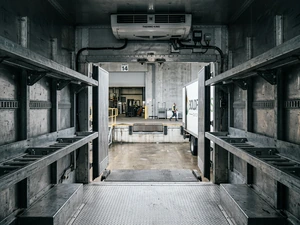
When a driver pulled up to a New Jersey logistics center in November 2025 and presented credentials for a carrier called Z Mile Inc., nobody at the facility had a reason to be suspicious. The paperwork matched. The truck was there. The driver loaded 43,100 pounds of frozen lamb and left.
The lamb was supposed to go to Minnesota and Wyoming. Instead, according to Manhattan prosecutors, it went to the Bronx.
How the Ring Worked
Manhattan District Attorney Alvin Bragg announced the indictment of eight men on June 3, charging them with running a coordinated cargo theft ring that operated from October 2025 through April 2026. According to court documents, the operation had two layers working together.
First, hackers infiltrated the computer systems of freight brokers and shipping companies, stealing the login credentials and winning bids that legitimate carriers had secured for specific shipments. With that data in hand, the defendants allegedly leased semi-trucks, affixed the names and registration numbers of the real carriers, and simply drove to the logistics facilities to pick up loads that were never theirs to take.
The stolen goods were then routed to the Bronx and sold on the black market, prosecutors said.
What Was Taken
Six thefts were identified in the indictment. Across those incidents, the ring allegedly stole approximately $165,000 worth of lamb, $432,000 in cheese, $295,000 in beef, more than $266,000 in copper rod, and more than $3.3 million in cigarettes - for a total of nearly $5 million in goods destined for businesses and consumers across multiple states.
In one incident from February 2026, court documents allege a defendant drove a truck impersonating Viking Transport to a Newark facility, loaded 43,100 pounds of copper rod, and drove it back through Manhattan before most of it was sold at a Brooklyn scrap yard.
In two separate incidents in March 2026, drivers allegedly impersonated a carrier called Preston Deliveries to collect over $3.3 million in cigarettes from a Virginia facility. Those cigarettes were intended for Tennessee and Florida.
The Human Cost Beyond the Numbers
Port Authority Chief Security Officer Greg Ehrie described the conspiracy as one that ‘used hacked data to impersonate shipping companies and intercept cargo’ in a way that required serious coordination to dismantle.
District Attorney Bragg said the investigation revealed the defendants were also interacting with other criminal syndicates connected to the hacking operations - and that his office has ‘reason to believe there are other incidents of this alleged conduct’ beyond the six identified in the indictment.
The losses do not stay inside the supply chain. Cargo theft at this scale drives up costs for retailers, insurers, and ultimately consumers. According to the American Transportation Research Institute, cargo theft costs the freight industry an estimated $18 million every single day in the United States.
Who Was Charged
The eight defendants - Murodullo Khasanov, Nodir Kobilov, Shavkatbek Mamadjanov, Rakhmiddin Abdullaev, Aleksey Vorobyev, Nizom Ismoilov, Doston Mardoev, and Dilshod Nabiev - each face one count of conspiracy in the fourth degree and varying counts of grand larceny. Additional charges include criminal possession of stolen property.
The charges in the indictment are allegations. All defendants are presumed innocent unless and until proven guilty.
The investigation involved the NYPD, the FBI’s New York Eurasian Organized Crime Task Force, the Port Authority of New York and New Jersey, and several other federal and state partners. The Manhattan District Attorney’s Office said the investigation remains ongoing.
What This Means for the Food Supply
Cargo theft is no longer a phenomenon limited to smash-and-grab store robberies. The scheme described in this indictment reads less like a heist and more like a corporate fraud operation - one that relied on insider access to logistics data, coordinated trucking, storage networks, and a ready market for stolen goods.
The FBI has documented a surge in ‘fictitious pickup’ fraud, where criminals use fraudulently obtained carrier credentials to intercept shipments. The National Insurance Crime Bureau estimates only about 1 in 10 theft attempts leads to an arrest, meaning the cases that reach indictment represent a fraction of the broader problem.
For the businesses, workers, and consumers whose goods never arrived, there are rarely easy answers - and often no recovery at all.
References: Eight indicted for impersonating shipping carriers in multi-state retail theft ring | Eight indicted in alleged carrier impersonation scheme

The Topline News team was assisted by generative AI technology in creating this content
Trending

Earn Massive Cash Back With This Card
Sponsored

Mark Sanchez Stabbed 4 Times - Now Faces Prison
Alex Morgan

The Dumb Money Mistake Most People Make
Sponsored
Teens Paid to Shoot and Film It. A Veteran Cop Was Killed Trying to Stop Them.
Jordan Reyes

These 14 Benefits Could Save Seniors Thousands
Sponsored
Alex Murdaugh's Murder Convictions Are Gone - He Is Still in Prison
Jordan Reyes

Body Parts Found in 2 Minnesota Lakes in 1993 Finally Identified
Taylor Bennett

Actor From 'Top Gun: Maverick' Killed at Home - Arrest Made
Taylor Bennett
Actor From 'Elf' and 'Friday' Arrested After Missing Child Support Hearing
Jordan Reyes
Psychotherapist, New Mom, Stabbed to Death at Home
Dana Whitfield

James Harden Pulled Over at 3 A.M., Booked by Dawn
Taylor Bennett

Husband Sentenced to Life in Au Pair Murder Case
Taylor Bennett
They Planned Drone Bombs Over the Crowd. A Teenager's Mother Called the FBI.
Dana Whitfield

Jury Rejects Self-Defense, Sends Teen to Prison 35 Years for Track Meet Killing
Taylor Bennett
IRS Agent Gets Life in Prison After Double Murder Plot With Family's Nanny
Alex Morgan
'Get Him Out of Here' - Judge Orders Gilgo Beach Killer Removed After Families Speak
Alex Morgan

Georgia Couple Arrested for Murder After Bartender Found Dismembered in Reservoir
Dana Whitfield

Cold Case Investigator Says Marilyn Monroe's Death Scene Was 'Too Pristine'
Jordan Reyes
Mail Carrier Killed Months After Losing Her Husband
Taylor Bennett

Missing Royal Caribbean Crew Member Found Dead in St. Kitts
Dana Whitfield

Mom's Birthday Text Came Hours Before Daughter Killed Her
Jordan Reyes

Pastor Dies Hours Before Facing Wife's Murder Charge
Jordan Reyes
Three Women Charged in Daylight Murder of Young Mom
Alex Morgan

Nicole Brown Simpson Said 'I'd Rather Die' - Her Ex Finally Speaks
Dana Whitfield