
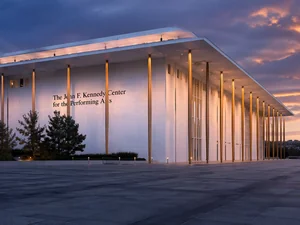
Artists Are Walking Away From the Kennedy Center After One Major Change
By Jordan Reyes. Apr 15, 2026
The letters went up on the building. The artists walked out the door.
Since President Trump’s administration took over the board of the John F. Kennedy Center for the Performing Arts earlier this year, the fallout has been swift and public. Hamilton pulled out. Issa Rae followed. So did Ben Folds, Renee Fleming, and Rhiannon Giddens. The venue that has long served as America’s living room for the performing arts now carries the President’s name on its facade – and a growing list of vacancies on its calendar.
The question the cultural world is asking: What happens to a national arts institution when the art itself starts leaving?
From Board Takeover to Physical Renaming
The conflict began in February when the Trump administration moved to install a new board at the Kennedy Center, a federally chartered institution that has operated with considerable independence since its founding in 1971. The renaming followed – the name “Trump” was physically added to the building – a move the Kennedy family publicly called illegal.
A congresswoman filed a lawsuit. The Kennedy family objected on the grounds that the center was chartered by Congress in honor of President John F. Kennedy and cannot be renamed by executive action alone. Legal challenges are ongoing.
Richard Grenell, the center’s new president, dismissed the artist cancellations as “a form of derangement syndrome.” He has characterized the departures as politically motivated and argued the venue would thrive under new leadership.
The Artists Departing
The exodus has been notable for the breadth of names involved. Hamilton, the most commercially successful American musical of the modern era, withdrew its engagement. Issa Rae – one of the most prominent voices in contemporary television – announced she would not participate in scheduled programming. Ben Folds and classical soprano Renee Fleming, figures with broad bipartisan appeal, also stepped away.
Rhiannon Giddens, the MacArthur Fellow and Grammy-winning multi-instrumentalist whose work spans folk, classical, and jazz traditions, canceled as well. Each departure has been framed not as a political statement but as a personal decision about which platforms artists are willing to lend their work to.
What the Law Actually Says
The Kennedy Center’s founding legislation designates it a living memorial to President Kennedy and places it under federal oversight. Legal scholars have noted that while the President appoints board members, the renaming of a congressionally chartered memorial raises questions that go beyond executive prerogative.
The Kennedy family has been explicit: the center was named to honor a specific person and a specific legacy, and that legacy is not transferable by administration. The court challenge from a sitting member of Congress adds a formal legal dimension to what began as a cultural controversy.
The Larger Stakes
What is unfolding at the Kennedy Center is not simply a story about one venue or one administration. It is a visible test of how American cultural institutions respond when their independence is challenged by political power – and how artists decide where to draw their lines.
The center still operates. Performances are still scheduled. But the departures have shifted something. Organizations that once would have been proud to perform on that stage are now publicly declining the invitation.
The building has a new name. Whether it retains its identity as the country’s premier arts institution is a question still being answered, one cancellation at a time.
References: 10 pop culture moments 2025 171047269 | artists cancel performances over 9094887 | kennedy center trump artist cancellations 1236658636

The Topline News team was assisted by generative AI technology in creating this content
Trending

Earn Massive Cash Back With This Card
Sponsored
Alex Murdaugh's Murder Convictions Are Gone - He Is Still in Prison
Jordan Reyes

The Dumb Money Mistake Most People Make
Sponsored
Three Women Charged in Daylight Murder of Young Mom
Alex Morgan

These 14 Benefits Could Save Seniors Thousands
Sponsored
Mark Sanchez Stabbed 4 Times - Now Faces Prison
Alex Morgan

Mail Carrier Killed Months After Losing Her Husband
Taylor Bennett
Actor From 'Top Gun: Maverick' Killed at Home - Arrest Made
Taylor Bennett
Psychotherapist, New Mom, Stabbed to Death at Home
Dana Whitfield
They Planned Drone Bombs Over the Crowd. A Teenager's Mother Called the FBI.
Dana Whitfield
'Get Him Out of Here' - Judge Orders Gilgo Beach Killer Removed After Families Speak
Alex Morgan
James Harden Pulled Over at 3 A.M., Booked by Dawn
Taylor Bennett
Actor From 'Elf' and 'Friday' Arrested After Missing Child Support Hearing
Jordan Reyes

Georgia Couple Arrested for Murder After Bartender Found Dismembered in Reservoir
Dana Whitfield
Pastor Dies Hours Before Facing Wife's Murder Charge
Jordan Reyes
Husband Sentenced to Life in Au Pair Murder Case
Taylor Bennett
Texas Psychics Charged After Telling Victims a Curse Required a Corvette
Alex Morgan

Missing Royal Caribbean Crew Member Found Dead in St. Kitts
Dana Whitfield
IRS Agent Gets Life in Prison After Double Murder Plot With Family's Nanny
Alex Morgan
Mom's Birthday Text Came Hours Before Daughter Killed Her
Jordan Reyes
Cold Case Investigator Says Marilyn Monroe's Death Scene Was 'Too Pristine'
Jordan Reyes

Nicole Brown Simpson Said 'I'd Rather Die' - Her Ex Finally Speaks
Dana Whitfield
Jury Rejects Self-Defense, Sends Teen to Prison 35 Years for Track Meet Killing
Taylor Bennett

Body Parts Found in 2 Minnesota Lakes in 1993 Finally Identified
Taylor Bennett