
Trump Is About to Put His Signature on the U.S. Dollar
By Jordan Reyes. Mar 28, 2026
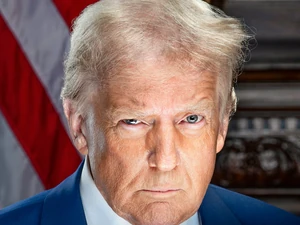
Official presidential portrait of Donald J. Trump from January 2025. Public domain U.S. government photograph via Wikimedia Commons.
Since the United States first printed paper currency in 1861, the bills in Americans’ wallets have carried the signatures of two Treasury officials — the Secretary of the Treasury and the Treasurer of the United States. That tradition is about to end. On March 26, 2026, the U.S. Treasury Department announced that President Donald Trump’s signature will appear on all new U.S. paper currency, making him the first sitting president in American history to sign the nation’s money.
The announcement was framed by Treasury Secretary Scott Bessent as a tribute to the country’s 250th anniversary. “There is no more powerful way to recognize the historic achievements of our great country and President Donald J. Trump than U.S. dollar bills bearing his name,” Bessent said in a formal statement. The first redesigned bills — $100 notes — are expected to begin circulating this summer, with Trump’s signature appearing alongside Bessent’s and replacing the traditional Treasurer’s signature entirely.
Why This Has Never Happened Before
The decision to keep presidential signatures off U.S. currency was never codified as a specific law — it was a convention, a practice so consistently observed for so long that it effectively became a rule. Federal law does prohibit the image of a living president from appearing on circulating currency, which is why a separate effort to put Trump’s likeness on a $1 coin has faced legal complications. A signature, however, occupies different legal ground, and the Treasury Secretary holds broad discretion over currency design under the law that authorized paper notes in 1862.
The move follows a pattern visible across Trump’s second term. His name has been affixed to the Kennedy Center for the Performing Arts, the U.S. Institute of Peace, a prescription drug discount program, and a proposed class of warships. In 2020, his name also appeared on COVID stimulus checks. Adding it to the dollar bill is the most visible expression yet of that impulse — one that is now literally in circulation.
The Reaction
Response to the announcement divided along predictable lines. Supporters pointed to the 250th anniversary framing and the Treasury’s argument that the move reflects the president’s economic stewardship. Critics raised concerns about the precedent — what it means for future administrations, for the neutrality of the currency as a national symbol, and for the perception of the dollar abroad.
Michael Bordo, director of the Center for Monetary and Financial History at Rutgers University, told Reuters that the move will inevitably carry political weight but that it may not cross any clear legal line, given the Treasury Secretary’s authority over currency design. Democrats in Congress introduced legislation to prohibit any sitting or living president from appearing on U.S. currency in any form, though the bills face an uncertain path in the current Congress.
What the Dollar Represents
The U.S. dollar is more than a transaction instrument. It is a symbol of institutional continuity — designed to convey stability, neutrality, and the permanence of the republic rather than the personality of any individual who happens to hold power. The faces that do appear on U.S. currency are all historical figures, chosen precisely because their association with the country is no longer tied to a living political career.
Adding a sitting president’s signature changes that relationship in a way that is difficult to fully quantify. Whether it reads as a fitting tribute or an overstep depends heavily on where the reader sits politically — and that ambiguity is itself part of the story. The dollar, by design, was never supposed to be something people disagreed about.
The Bills Are Coming
The practical reality is straightforward: the new bills are being printed, and they will enter circulation. Americans will carry them in their wallets, use them at registers, and pass them across counters without thinking much about whose name is on the back. That, in a sense, is the quiet power of the move — not the announcement, but the accumulation of ordinary moments that follow it.
In 2026, the question is not whether Trump’s signature will appear on U.S. currency. It will. The question the country is still working out is what that means — and what it says about the relationship between the office, the person who holds it, and the symbols a nation chooses to carry.
References: Trump’s signature to appear on paper currency, dollar bills, in first for a sitting president | Trump’s signature is being added to US paper currency | Trump’s signature added to US currency by Treasury

The Topline News team was assisted by generative AI technology in creating this content
Trending

Earn Massive Cash Back With This Card
Sponsored

Nicole Brown Simpson Said 'I'd Rather Die' - Her Ex Finally Speaks
Dana Whitfield

The Dumb Money Mistake Most People Make
Sponsored
Alex Murdaugh's Murder Convictions Are Gone - He Is Still in Prison
Jordan Reyes

These 14 Benefits Could Save Seniors Thousands
Sponsored

Husband Sentenced to Life in Au Pair Murder Case
Taylor Bennett

Mark Sanchez Stabbed 4 Times - Now Faces Prison
Alex Morgan

IRS Agent Gets Life in Prison After Double Murder Plot With Family's Nanny
Alex Morgan

Three Women Charged in Daylight Murder of Young Mom
Alex Morgan

Actor From 'Top Gun: Maverick' Killed at Home - Arrest Made
Taylor Bennett

Georgia Couple Arrested for Murder After Bartender Found Dismembered in Reservoir
Dana Whitfield
Actor From 'Elf' and 'Friday' Arrested After Missing Child Support Hearing
Jordan Reyes

Texas Psychics Charged After Telling Victims a Curse Required a Corvette
Alex Morgan

Mom's Birthday Text Came Hours Before Daughter Killed Her
Jordan Reyes

Cold Case Investigator Says Marilyn Monroe's Death Scene Was 'Too Pristine'
Jordan Reyes

'Get Him Out of Here' - Judge Orders Gilgo Beach Killer Removed After Families Speak
Alex Morgan

Pastor Dies Hours Before Facing Wife's Murder Charge
Jordan Reyes

Mail Carrier Killed Months After Losing Her Husband
Taylor Bennett
They Planned Drone Bombs Over the Crowd. A Teenager's Mother Called the FBI.
Dana Whitfield

Teens Paid to Shoot and Film It. A Veteran Cop Was Killed Trying to Stop Them.
Jordan Reyes

Psychotherapist, New Mom, Stabbed to Death at Home
Dana Whitfield

Jury Rejects Self-Defense, Sends Teen to Prison 35 Years for Track Meet Killing
Taylor Bennett

Missing Royal Caribbean Crew Member Found Dead in St. Kitts
Dana Whitfield

James Harden Pulled Over at 3 A.M., Booked by Dawn
Taylor Bennett